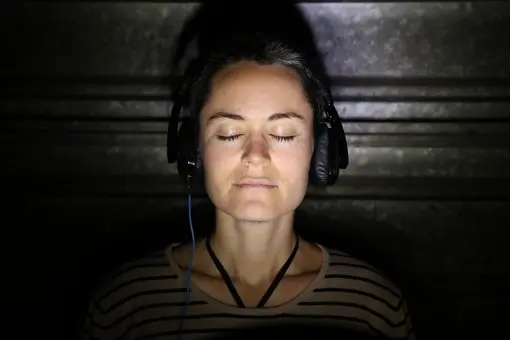
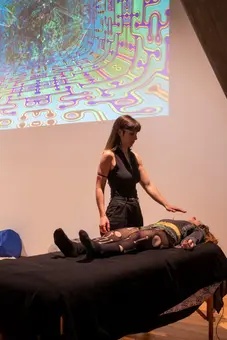
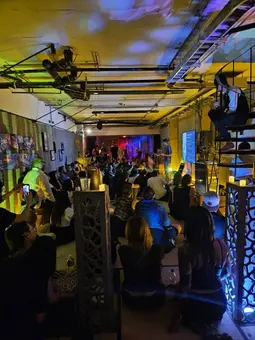
Technology that reconnects us with what makes us human.

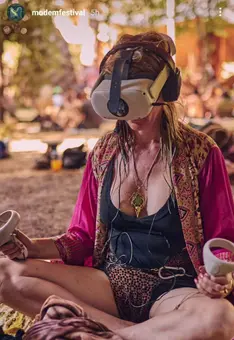
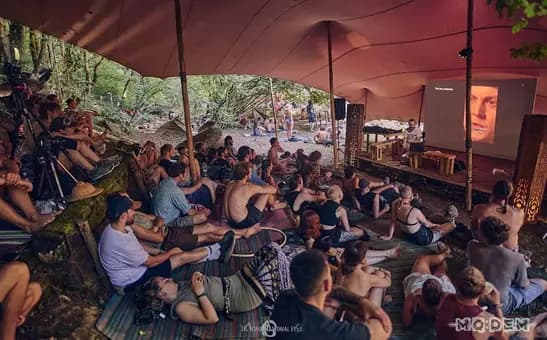
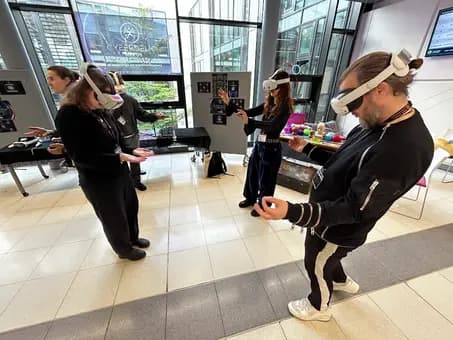
Artists, technologists, researchers, and curious minds exploring how technology can deepen awareness, creativity, and connection.

  • Experiences

  • Learning

  • Research

  • Community

What cyberdelic means

A more intentional relationship with technology. A deeper exploration of human experience.

Cyber
kubernetikos to steer, to navigate
Delic
dēlos to reveal, to make visible

The art of revealing and navigating the mind.

  • Immersive worlds

  • Sound and light

  • Biofeedback

  • Emerging tools

What connects them isn’t a particular device. It’s the incentives behind the experience.

Why we exist

Beyond distraction. Toward deeper participation.

Not just extraordinary experiences, but something we can carry into ordinary life.

Our ecosystem

Five paths. One shared purpose.

There’s more than one way into the cyberdelic world.

Together, these paths connect what we discover, who we meet, what we create, and how we live.

Our principles

Curiosity, grounded in care.

  1. Human agency first.

    Technology should support our capacity to choose, create, and connect.

  2. Wonder with discernment.

    Extraordinary experiences, without confusing possibility with proof.

  3. Integration over intensity.

    What matters is what we learn and carry forward.

  4. Discovery through collaboration.

    Art, science, technology, and lived experience have more to offer when they meet.

We’re not building an audience.We’re cultivating a culture.

Our story

From the counterculture to cyberdelics.

Where this movement comes from, and how it is evolving.

  1. 1961Machine

    The Dreamachine

    Brion Gysin and Ian Sommerville build a flicker device: the first art object to be seen with the eyes closed.

  2. 1964Book

    Understanding Media

    Marshall McLuhan argues that every medium is an extension of ourselves, and that it reshapes us as we use it.

  3. 1966Gathering

    The Trips Festival

    Stewart Brand, Ken Kesey and Ramón Sender stage three nights of light, sound and performance in San Francisco.

  4. 1968Person

    Ralph Abraham

    A mathematician moves to UC Santa Cruz after his first LSD and treats mathematics as a skeleton key to the structures of consciousness.

  5. 1968Book

    The Human Biocomputer

    John C. Lilly describes the mind as a computer that can be reprogrammed from within.

  6. 1968Magazine

    Whole Earth Catalog

    “Access to tools.” Stewart Brand gives the counterculture a way to see technology as personal.

    In the knowledge bank
  7. 1968Technology

    The Mother of All Demos

    Doug Engelbart shows the mouse, hypertext and video conferencing in one sitting, with Stewart Brand helping behind the scenes.

  8. 1968Technology

    The Sword of Damocles

    Ivan Sutherland builds the first head-mounted display: the ancestor of every headset since.

  9. 1969Book

    Spaceship Earth

    Buckminster Fuller writes an operating manual for the planet, and asks us to think like its crew.

  10. 1972Book

    The Center of the Cyclone

    John C. Lilly writes an autobiography of inner space, mapping the mind from the inside.

  11. 1972Article

    Spacewar

    “Ready or not, computers are coming to the people.” Stewart Brand finds the counterculture in the computer labs, for Rolling Stone.

  12. 1975Art

    Videoplace

    Myron Krueger's responsive environments let people step into a world that answers their bodies, without a headset.

  13. 1982Film

    Blade Runner

    Philip K. Dick's 1968 question about what makes us human reaches the screen.

    In the knowledge bank
  14. 1983Art

    La Plissure du Texte

    Roy Ascott links artists in cities across the world by computer to write one story together: distributed authorship, and the viewer becomes a participant.

  15. 1984Book

    Neuromancer

    William Gibson gives cyberspace its image: “a consensual hallucination.”

    In the knowledge bank
  16. 1984Magazine

    High Frontiers

    R.U. Sirius starts a journal of psychedelics, science and the space age. It becomes Reality Hackers, then Mondo 2000.

  17. 1984Technology

    VPL Research

    Jaron Lanier's company sells the first VR goggles and gloves, and makes “virtual reality” a household phrase.

  18. 1985Network

    The WELL

    Stewart Brand and Larry Brilliant found one of the first online communities.

  19. 1989Magazine

    Mondo 2000

    The cyberdelic manifesto in print: technology, mind expansion and creative expression, in one glossy, mutant magazine.

  20. 1990Movement

    Electronic Frontier Foundation

    John Perry Barlow, Mitch Kapor and John Gilmore organise to defend freedom in the new space.

  21. 1991Gathering

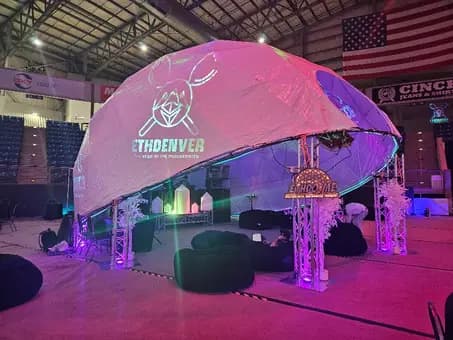
    The Cyberdome

    In Stuttgart, Terence McKenna puts the cyberdelic future in front of a German audience, with virtual reality in the hands of artists.

    Watch the talk
  22. 1991Book

    The Archaic Revival

    Terence McKenna joins mushrooms, shamanism and virtual reality into one argument about the future.

  23. 1992Book

    Trialogues at the Edge of the West

    Ralph Abraham, Terence McKenna and Rupert Sheldrake on chaos, creativity and the sacred.

  24. 1992Book

    Snow Crash

    Neal Stephenson names the metaverse, and treats language itself as a virus of the mind.

    In the knowledge bank
  25. 1993Art

    Placeholder

    Brenda Laurel and Rachel Strickland build a shared virtual world where you can take on the body of a spirit animal.

  26. 1994Book

    Chaos & Cyber Culture

    “The PC is the LSD of the 1990s.” Timothy Leary popularises the idea behind the word cyberdelic.

  27. 1994Book

    Cyberia

    Douglas Rushkoff reports from the rave, the hacker scene and the first days of the net.

    In the knowledge bank
  28. 1995Art

    Osmose

    In Char Davies' virtual world you move by breath and balance. Many visitors call it meditative.

  29. 1996Manifesto

    A Declaration of the Independence of Cyberspace

    John Perry Barlow claims the net as a realm free of governments and corporations.

  30. 1998Book

    TechGnosis

    Erik Davis traces the myth, magic and mysticism running through information technology.

    In the knowledge bank
  31. 2000Turning point

    The Collapse

    The dot-com bubble bursts and the techno-utopian dream fades. Wikipedia records the movement as collapsed. It goes underground instead.

    Read on Wikipedia
  32. 2000Book

    Art, Technology, Consciousness

    Roy Ascott keeps the question alive in the academy: how networks and new media change consciousness.

    In the knowledge bank
  33. 2005Book

    What the Dormouse Said

    John Markoff shows how the sixties counterculture shaped the personal computer.

  34. 2006Book

    From Counterculture to Cyberculture

    Fred Turner follows Stewart Brand and the Whole Earth network into the rise of digital utopianism.

  35. 2011Book

    Ready Player One

    Ernest Cline brings the virtual world back into the popular imagination.

    In the knowledge bank
  36. 2012Technology

    Oculus Rift

    A Kickstarter restarts consumer VR, and with it the old question of what these machines could do to a mind.

  37. 2013Movement

    Consciousness Hacking

    Mikey Siegel starts a meetup in San Francisco for technology that serves awareness and wellbeing. It grows into a movement with groups around the world.

    Visit the community
  38. 2014Talk

    A Cyberdelic History of the Future

    David Pescovitz tells the story at the Lift conference in Geneva: “Just Say Know.”

    Watch the talk
  39. 2016Technology

    VR comes home

    Consumer headsets ship, and the first meditative and contemplative experiences reach people's living rooms.

  40. 2017Research

    The Hallucination Machine

    Neuroscientists use VR and deep dream imagery to study altered perception without a drug.

    In the knowledge bank
  41. 2017Our origin

    The Cyberdelic Society

    We start finding the others: the community the Nexus grew from.

  42. 2019Technology

    Experiences without a cable

    Standalone headsets put immersive worlds within reach of far more people, without a computer.

  43. 2020Manifesto

    The Technodelic Manifesto

    Robin Arnott releases SoundSelf: A Technodelic, and makes the word technodelic known: experiences designed with psychedelic intent, run by the body's own feedback.

    In the knowledge bank
  44. 2022Research

    Isness-D

    A group VR experience scores like a medium dose of psychedelics on four scales of connectedness.

  45. 2022Research

    Research Cyberdelics

    Context engineering meets psychedelics: designing for altered traits, not only altered states.

    In the knowledge bank
  46. NowYou

    The next chapter is ours

    This story isn’t finished, and no one is writing it alone. It takes shape through everyone who explores, questions, creates and takes part.

Finding the others.

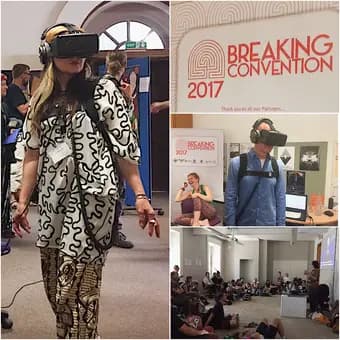
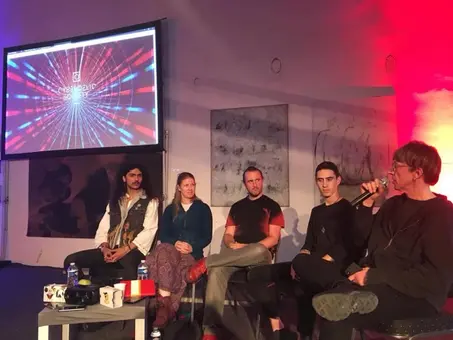
Since 2017, we’ve been finding more humans looking for a deeper relationship with technology.

The people

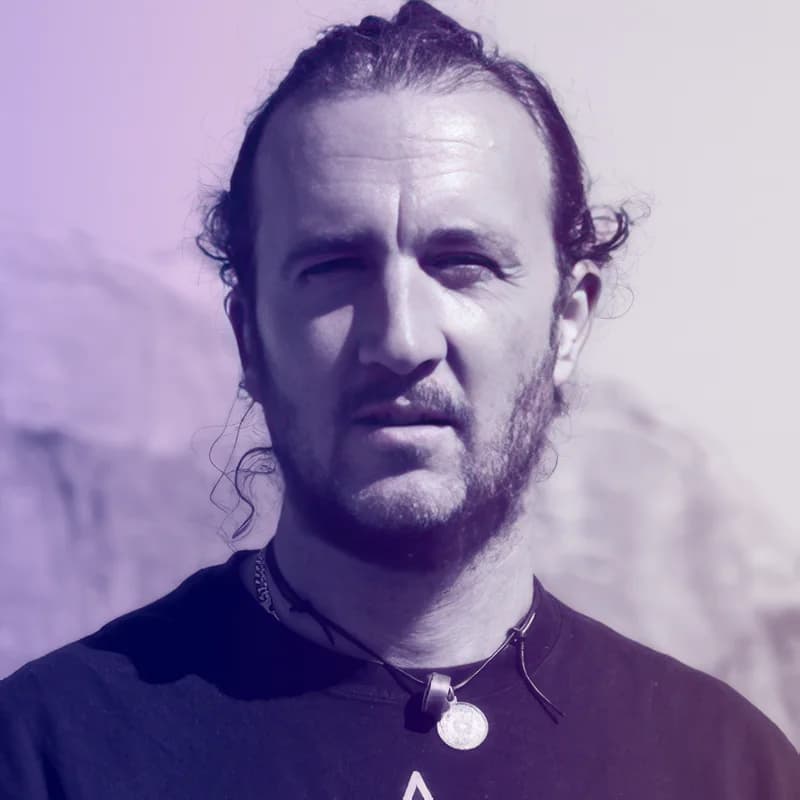
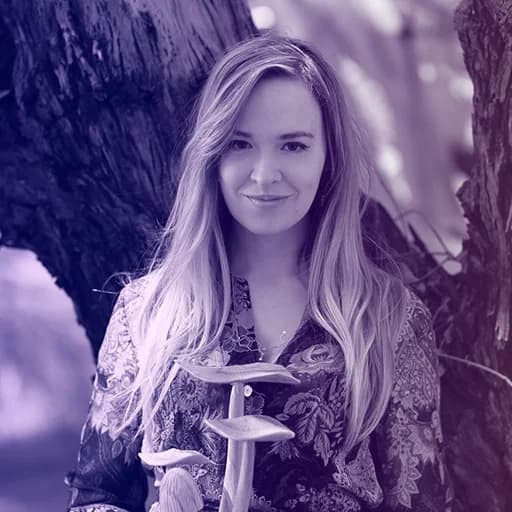
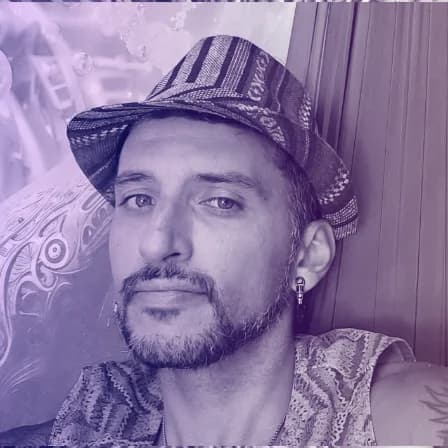
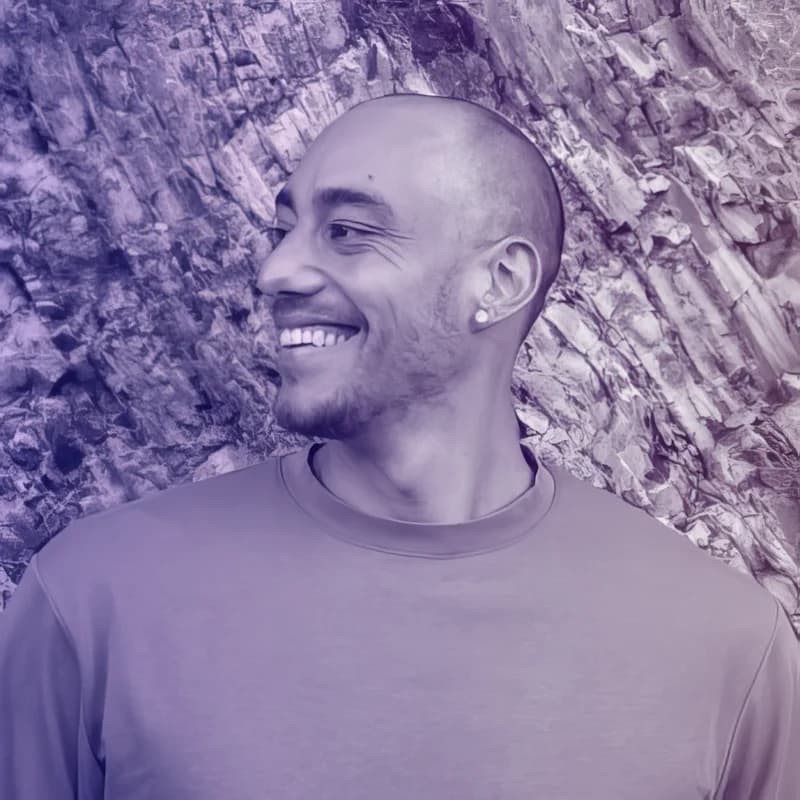
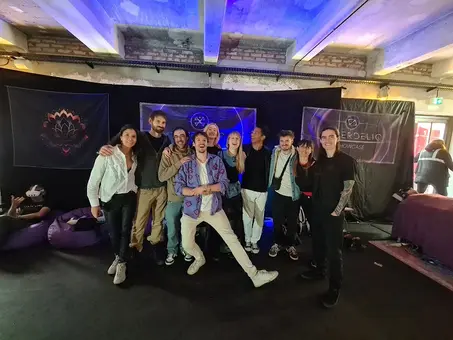
Meet the humans behind the Nexus.

A shared curiosity about consciousness, and a commitment to exploring technology with intention.

Co-create the cyberdelic paradigm

This future takes all of us.

It isn’t something we build for others to watch. It takes shape through the people who explore, question, create, and contribute.

  • Become a member

    Find your people and take an active part in a community exploring technology, art, and consciousness.

    Become a member
  • Support the work

    Help create more opportunities for people to encounter cyberdelic experiences, exchange knowledge, and explore together.

    Donate
  • Bring your skills

    Contribute your perspective, craft, and curiosity to the people building the Nexus.

    Join the team
New here? Create a free account

Tickets

Tickets

Search Cyberdelic Nexus