
Knowledge · Research paper
A predictive coding approach to psychedelic virtual-induced hallucinations and creative cognition in aging
By Giulia Magni, Cosimo Tuena, Giuseppe Riva
Recent research explores the potential of psychedelics in enhancing cognitive flexibility and creativity, particularly through Virtual Reality (VR) simulations. This approach may help counteract cognitive decline in aging, as it optimizes the balance between expectations and sensory information, thereby supporting creative cognition and maintaining cognitive functions.
- Kind
- Research paper35 research papers in the bank
- Published
- 2023Where it sits among everything in the Knowledge Bank, by year
- Authors
Topics
Abstract
About the paper
Recent research has investigated the potential of psychedelic substances in treating various neurological and psychiatric disorders. In particular, there has been a growth in studies concerning the intersection of psychedelics, Virtual Reality (VR), and Cognitive Flexibility (CF). Indeed, the use of immersive technology allows the simulation of the perceptual and cognitive effects of psychedelic substances without the potential risks associated with them. CF is strongly associated with creative cognition, a complex cognitive mechanism involved in creative thinking and associated with the prefrontal cortex and the neural networks supporting executive functions, memory, attention, and spontaneous modes of thought. The Bayesian brain approach, which is rooted in predictive coding, has emerged as a promising framework for understanding the effects of psychedelic hallucinations on cognitive functioning.
Psychedelic substances may enhance creativity by inducing a state of CF, allowing for a wider range of associations and possibilities to be explored and increasing openness to experience. A decline in cognitive abilities, including creative processing and divergent thinking, is observed during the aging process. In particular, studies on Mild Cognitive Impairment (MCI) show poorer performance in executive functions, including CF. The present paper suggests that psychedelic hallucinations induced by VR may help optimize the balance between top-down expectations and bottom-up sensory information. Therefore, enhanced CF and creativity may be crucial during the aging process for maintaining cognitive functions and preventing pathological conditions.
Related
More like this
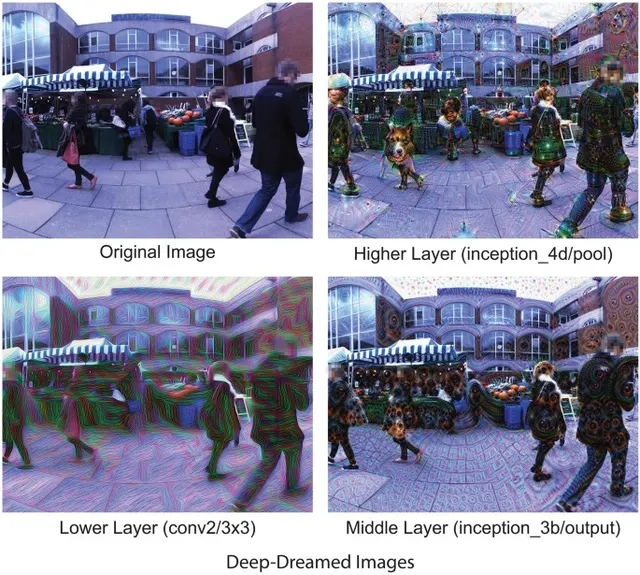
A Deep-Dream Virtual Reality Platform for Studying Altered Perceptual Phenomenology - Scientific Reports
A novel tool called the Hallucination Machine combines deep convolutional neural networks and panoramic VR to simulate visual hallucinatory experiences, mimicking the phenomenology of psychedelics without altering neurophysiology. Experiments show it induces similar visual effects but does not produce the temporal distortions typically associated with altered states.

Why I've Never Mixed Weed With Virtual Reality
Combining virtual reality with cannabis may diminish the unique experiences each offers, as both have transformative qualities that can be compromised when mixed. The author reflects on their fascination with virtual reality since adolescence, influenced by cultural works like Snow Crash and Lawnmower Man.

Digital hallucinations boost creativity - no drugs required
Researchers in Milan have developed a project called Cyberdelics, which combines immersive virtual reality and artificial intelligence to create digital hallucinations that mimic psychedelic experiences without the use of drugs. This technology helps users think differently and promotes relaxation.
- Editor
- Not recorded yet
- Last reviewed
- Not reviewed yet
Conversation
Share your experience of it
What it was like, what helped, what you would tell someone before they try it.