Knowledge · Research paper
Emotional Beasts
By Guillermo Bernal, Pattie Maes
Advancements in VR and physiological sensing enable immersive communication through lifelike avatars. The proposed solution involves integrating bio-signal sensors to detect users' emotional states and creating expressive avatars, termed Emotional Beasts. This approach aims to enhance self-expression and emotional connection in VR, moving beyond surface-level experiences to foster deeper human interactions.
- Kind
- Research paper35 research papers in the bank
- Published
- 2017Where it sits among everything in the Knowledge Bank, by year
- Authors
Topics
Abstract
About the paper
With the advances in Virtual Reality (VR) and physiological sensing technology, even more immersive computer-mediated communication through life-like characteristics is now possible. In response to the current lack of culture, expression and emotions in VR avatars, we propose a two-fold solution. First, integration of bio-signal sensors into the HMD and techniques to detect aspects of the emotional state of the user. Second, the use of this data to generate expressive avatars which we refer to as Emotional Beasts. The creation of Emotional Beasts will allow us to experiment with the manipulation of a user's self-expression in VR space and as well as the perception of others in it, providing some valuable tools to evoke a desired emotional reaction. As this medium moves forward, this and other tools are what will help the field of virtual reality expand from a medium of surface-level experience to one of deep, emotionally compelling human-to-human connection.
Related
More like this

How Immersion, Presence, Emotion, & Workload Differ in Virtual Reality and Traditional Game Mediums
This study assesses the differences in emotion, immersion, and presence between virtual reality and traditional gaming experiences. It explores how these factors influence perceived workload and emotional responses, aiming to provide statistical support for the immersive qualities of virtual reality, with implications for military training and consumer applications.
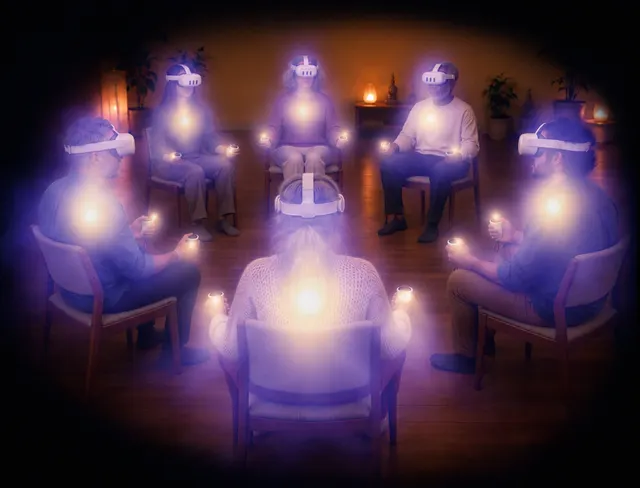
Autonomic indicators of self-transcendence: insights from the numadelic VR paradigm
HRV amplitude is identified as a physiological marker of self‑transcendent experiences during a “numadelic” VR paradigm, showing links to subjective self‑transcendence, compassion traits, and emotional improvement, though the study does not establish general clinical efficacy or long‑term effects.

The Experience of Presence: Factor Analytic Insights
Presence in virtual environments develops from constructing a spatial-functional mental model through bodily action representation and sensory input suppression. Two studies confirmed that presence reflects spatial presence, involvement, and a third component of "realness." A thirteen-item presence scale was developed, distinguishing between presence, immersion, and interaction factors.
- Editor
- Not recorded yet
- Last reviewed
- Not reviewed yet
Conversation
Share your experience of it
What it was like, what helped, what you would tell someone before they try it.