
Knowledge · Research paper
Immersive virtual reality or computerised mindfulness meditation for improving mood?
By Costina-Ruxandra Poetar
Mindfulness interventions effectively improve mood and reduce stress. This study compares the efficacy of immersive virtual reality-based mindfulness with computerised mindfulness meditation in a pilot trial, also examining potential simulator sickness effects on user engagement.
- Kind
- Research paper35 research papers in the bank
- Published
- 2023Where it sits among everything in the Knowledge Bank, by year
- Author
Topics
Abstract
About the paper
Mindfulness interventions are effective in improving mood, reducing stress, and increasing quality of life. New developments in technology bring important channels to deliver mindfulness interventions that can increase accessibility, such as the Internet, computerised interventions, mobile apps and recently, virtual reality (VR).
The aim of the present study is to enhance our current understanding of the use of VR in mindfulness, namely we examined in a pilot randomised trial the efficacy of an immersive VR-based mindfulness approach compared to an active control (computerised-based mindfulness meditation) on improving mood.
A secondary objective was to examine whether VR use resulted in simulator sickness which could affect user engagement.
Related
More like this

Eye movements in virtual environments
Recent advancements in virtual reality (VR) with embedded eye-tracking offer new opportunities for research, but they also present unique challenges for data collection and analysis. This paper discusses best practices for validating 3D gaze-tracking in VR, highlighting a pilot study that indicates accuracy may vary with stimulus distance and cautions against relying solely on vergence for estimating gaze depth.

Interview with Dr. Engelbert Winkler, co-Inventor of Lucia N°03 Light Technology
Interview with Dr. Engelbert Winkler discusses the Lucia N°03 Light Technology, highlighting its relevance in psychology, science, and technology. The content is available as a video for viewers interested in these subjects.
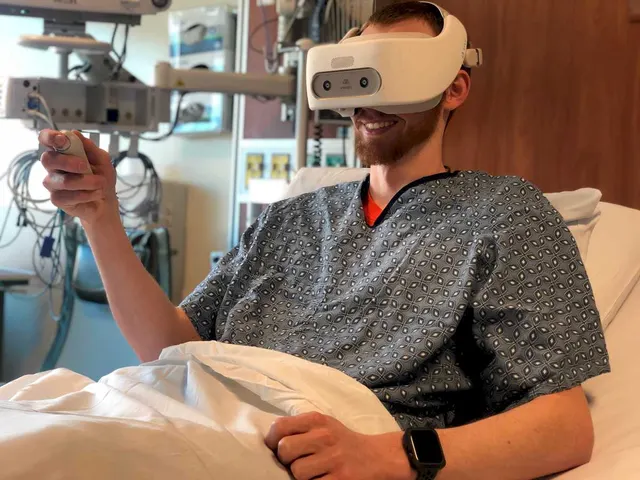
Clinical application of VR in patients with cardiovascular disease: state of the art
Cardiovascular disease remains a significant cause of morbidity and mortality, with patients experiencing various psychological symptoms, including anxiety and depression, which can impact recovery. Virtual reality (VR) technology has shown promise in improving psychological outcomes for patients with atherosclerotic cardiovascular disease (ASCVD) by providing immersive experiences that can alleviate distress and enhance recovery processes.
- Editor
- Not recorded yet
- Last reviewed
- Not reviewed yet
Conversation
Share your experience of it
What it was like, what helped, what you would tell someone before they try it.