
Knowledge · Article
Magic, VR, and Ketamine & Internal Family Systems
By Sunny Strasburg
Virtual reality is not a substitute for therapists; in-person human connections will become increasingly valuable as technology advances. Creative expression through art, music, or movement can preserve the depth of ineffable experiences, avoiding oversimplification through verbalization.
- Kind
- Article33 articles in the bank
- Published
- 2023Where it sits among everything in the Knowledge Bank, by year
- Author
Topics
Summary
About the article
“I do not see VR as a replacement for therapists at all. In fact, I think the more we get into technology and AI, the more in-person experiences with another human being are going to become increasingly valuable to us. We have evolved for hundreds of thousands of years to be prosocial animals that connect with other beings like us, and that’s not going away anytime soon. …I actually think that as AI and technology takes a lot of jobs, I think there are certain sectors of human connection that are going to become more important than ever.”
“I love [how] in holotropic breathwork, they have the mandalas with art materials and they encourage you to create a drawing or painting of what you experienced before you speak to anyone as part of that experience. And I really like that, because as soon as you start giving words to ineffable experience, it collapses it down to something that’s simplified beyond what it was. But you can keep it in that open-ended space when you make art …or you make music or dance around what you experienced. It holds that openness and that sublime energy of the ineffable.”
Related
More like this
Integrating SoundSelf in Ketamine Clinics
Ketamine clinics, effective for treatment-resistant depression, can enhance patient outcomes by integrating immersive technologies like SoundSelf. This biofeedback and neuro-stimulation tool serves as an adjunctive intervention, potentially improving the therapeutic experience for patients undergoing ketamine therapy.
VR, Biofeedback, and Digital Therapeutics: The Future of Mental Health
Exploration of the intersection of virtual reality, biofeedback, and digital therapeutics in enhancing mental health treatments, emphasizing the potential of technology in psychology and psychedelics.
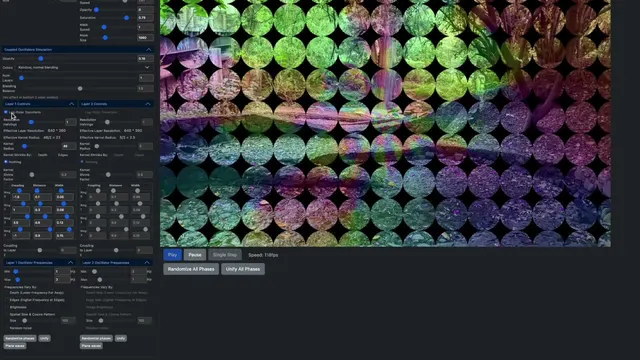
The Oscilleditor
The Oscilleditor is a GUI tool developed by QRI for modeling psychedelic visual phenomenology using coupled oscillators. It allows users to reconstruct and study non-ordinary visual experiences through advanced features like spatial drifting and chaotic coupling. The tool integrates insights from previous research and aims to create structured datasets linking subjective experiences to neurodynamics, offering significant scientific value. Instruction manuals and tutorials are available for users.
- Editor
- Not recorded yet
- Last reviewed
- Not reviewed yet
Conversation
Share your experience of it
What it was like, what helped, what you would tell someone before they try it.