Knowledge · Research paper
Modeling Psychedelic Tracers with QRI’s Psychophysics Toolkit: The Tracer Replication Tool
By Andrés Gómez-Emilsson
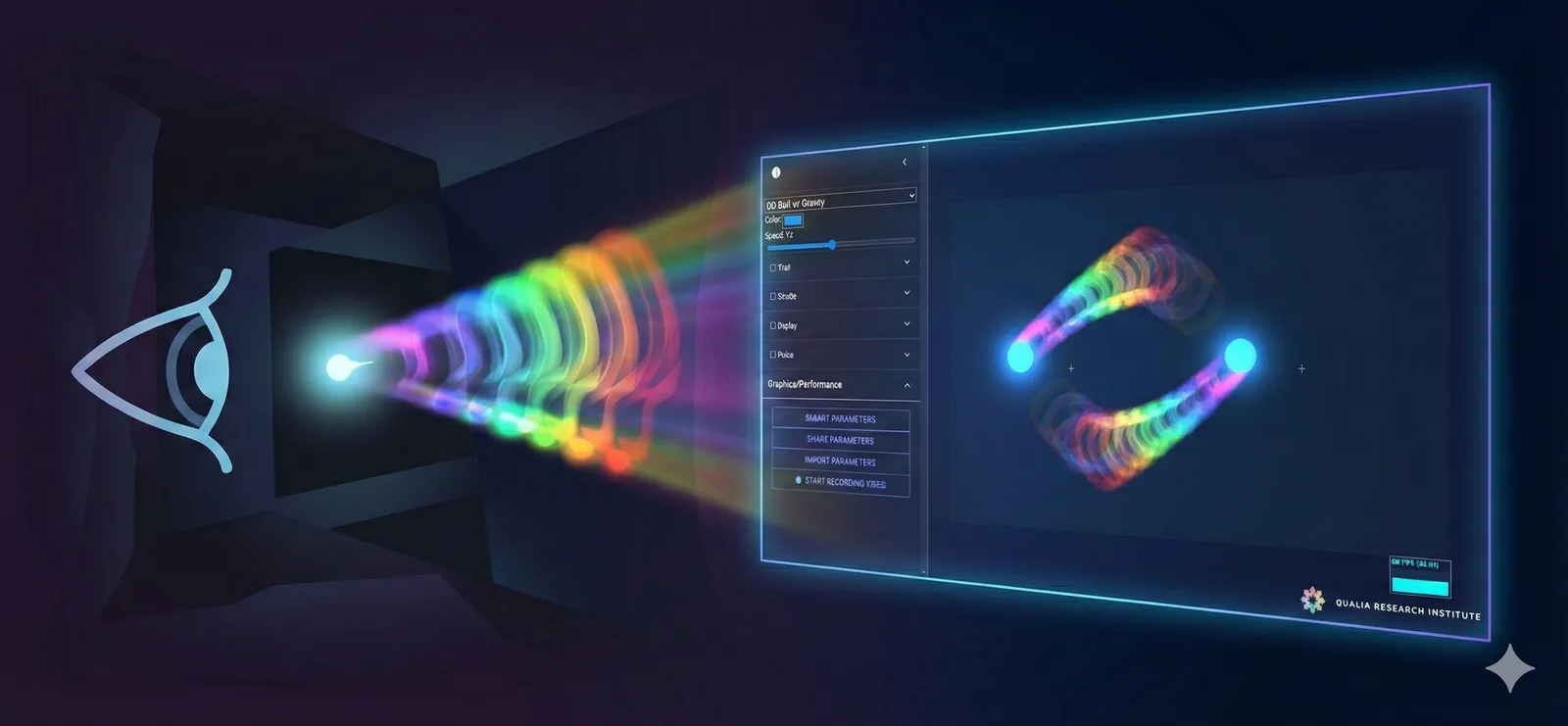
A new method called the Tracer Replication Tool has been developed to replicate psychedelic tracer effects, revealing how the time-like texture of experience influences states of consciousness. This tool aims to describe ineffable experiences, standardize a scale of psychedelic effects, quantify drug synergy, and test theories on the quality of experiences. Initial findings suggest distinct patterns in effects from various substances, such as THC and HPPD producing faint trails, and DMT resulting in vibrant visuals compared to the monochromatic effects of 5-MeO-DMT. The research encourages further exploration of these patterns within the scientific community and among psychonauts.
- Kind
- Research paper35 research papers in the bank
- Published
- 2020Where it sits among everything in the Knowledge Bank, by year
- Author
Topics
Abstract
About the paper
We developed a new method for replicating psychedelic tracer effects in detail: the Tracer Replication Tool. This tool gives us a window into how the time-like texture of experience determines the state of we find ourselves in, which clarifies what makes both meditating and taking psychedelics such powerful state-switching activities. We discuss how the technique of using the tracer tool may find useful applications, such as allowing us to describe exotic “ineffable” experiences in clear language, standardize a scale of intensity of psychedelic drug effects (a.k.a. a “High-O-Meter”), help us quantify the synergy between different drugs, and test theories for what makes an experience feel good or bad such as the . The pilot data collected with this tool so far is suggestive of the following patterns: (1) THC and HPPD result in a smooth and faint trail effect. (2) The characteristic frequencies of the strobe and replay effects for 2C-B are slower than those of either DMT or 5-MeO-DMT. And, (3) whereas DMT comes with a strong color pulsing effect leading to very colorful visuals, 5-MeO-DMT gives rise to monochromatic tracer effects. We conclude by discussing the implications of these patterns in light of an analysis of experience that allows for a varying time-like texture. We hope to inspire the scientific community and curious psychonauts to use this tool to help us uncover more patterns.
Related
More like this
Altered States Database
The Altered States Database (ASDB) is an open-science project by CIRCE, providing access to scientific data on pharmacological and non-pharmacological methods for inducing altered states of consciousness. It includes only peer-reviewed psychometric data and is updated annually based on systematic literature reviews. The project aims to support research on human consciousness, particularly in the context of psychedelics in therapy, by enhancing data comparability and optimizing study designs.
Flicker light stimulation enhances the emotional response to music: a comparison study to the effects of psychedelics
Flicker light stimulation (FLS) enhances emotional responses to music, similar to the effects of psychedelics. In a study with twenty participants, FLS significantly increased reported emotions, particularly "Joyful Activation," and intensity of FLS correlated with higher emotional arousal. These findings suggest further exploration of FLS as a method for inducing altered states of consciousness and its interaction with music-evoked emotions.
Autonomic indicators of self-transcendence: insights from the numadelic VR paradigm
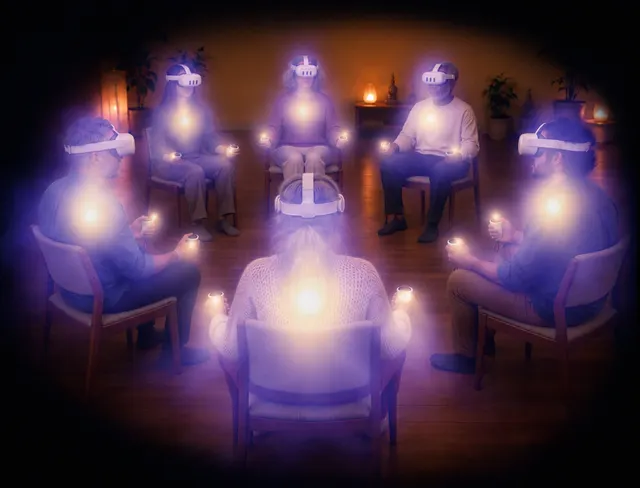
HRV amplitude is identified as a physiological marker of self‑transcendent experiences during a “numadelic” VR paradigm, showing links to subjective self‑transcendence, compassion traits, and emotional improvement, though the study does not establish general clinical efficacy or long‑term effects.
- Editor
- Not recorded yet
- Last reviewed
- Not reviewed yet
Conversation
Share your experience of it
What it was like, what helped, what you would tell someone before they try it.