
Knowledge · Research paper
Exploring Peak Experiences through Multi-Sensory Extended Reality
By Sunil Thaker, Maxi Heitmayer, Terry Hanley
Research explores how Multi-Sensory Extended Reality (MSXR) can induce Peak Experiences and altered states of consciousness to improve mental health. The study uses a qualitative phenomenological approach to capture participants' experiences and perceived therapeutic benefits, aiming to enhance the role of immersive technologies in mental health interventions and contribute to counseling psychology and consciousness studies.
- Kind
- Research paperFeatured35 research papers in the bank
- Published
- 2025Where it sits among everything in the Knowledge Bank, by year
- Authors
Topics
Abstract
About the paper
As poor mental health levels rise, technology may provide healing and personal growth for people by affording them non-ordinary states of consciousness. This doctoral research will investigate the potential for Multi-Sensory Extended Reality (MSXR) to induce Peak Experiences (PEs) and altered states of consciousness (ASCs), contributing to therapeutic innovation and user engagement in interactive media. Drawing on Abraham Maslow’s humanistic framework, and notions of PE, this study will explore whether immersive experiences combining sound, vision, and somatic interaction can evoke transformative states of consciousness and moments of PE. Using a qualitative phenomenological design, the project will capture participants’ lived experiences through MSXR engagements and investigates perceived therapeutic benefits. By positioning MSXR within human-centred computing and Digitally Induced Altered States of Consciousness (DIAL), this research aims to expand the role of immersive technologies in mental health interventions, contributing to the fields of counselling psychology, interactive media, and consciousness studies.
Related
More like this

Sipping the virtual elixir: An autoethnographic close reading of Ayahuasca Kosmik Journey, a self-transcendent virtual experience
Self-transcendent experiences in ancient psychedelic ceremonies, like ayahuasca, can be explored through virtual reality (VR) as a legal alternative. An autoethnographic analysis of Ayahuasca Kosmik Journey reveals insights into the design and experience of cyberdelic interactions, highlighting themes of agency, embodiment, and self-transcendence. The study emphasizes the role of spatiality and sensory engagement in evoking profound emotional responses, while also addressing the limitations of immersive technology in replicating these experiences.
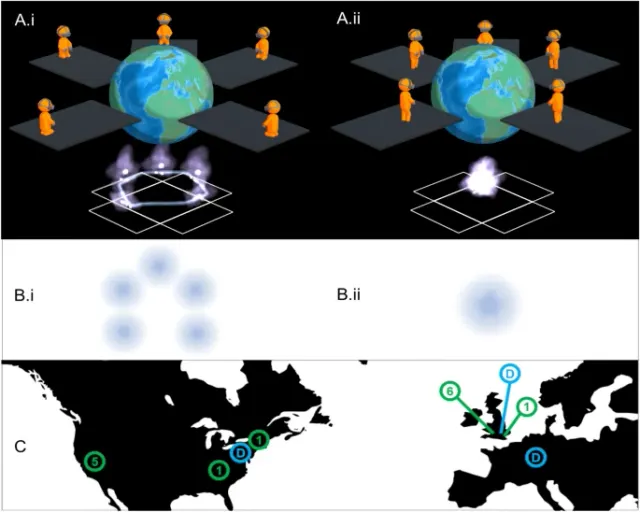
Group VR experiences can produce ego attenuation and connectedness comparable to psychedelics
Research explores the potential of virtual reality (VR) to create self-transcendent experiences (STEs) similar to those induced by psychedelics. Using a framework called 'Isness-distributed', participants in shared VR spaces experience a blurring of self-other boundaries, leading to moments of 'energetic coalescence'. Analysis of 58 participants showed that the subjective experiences in VR were statistically comparable to those reported in psychedelic studies, indicating VR's capability to facilitate intersubjective STEs that dissolve individual ego in connection with others.

Virtual reality: a powerful technology to provide novel insight into treatment mechanisms of addiction
Virtual reality (VR) is emerging as a significant tool in mental health research, particularly for studying addiction. It offers immersive environments that simulate real-life scenarios, allowing researchers to investigate factors like craving, psychophysiology, and cognition in addiction treatment. VR enables standardized experimental designs and personalized simulations, enhancing understanding of treatment mechanisms and potentially leading to more effective therapeutic strategies.
- Editor
- Not recorded yet
- Last reviewed
- Not reviewed yet
Conversation
Share your experience of it
What it was like, what helped, what you would tell someone before they try it.