Explore
Knowledge
Papers, articles, books, videos and tools on technology, art and consciousness, collected and summarised.
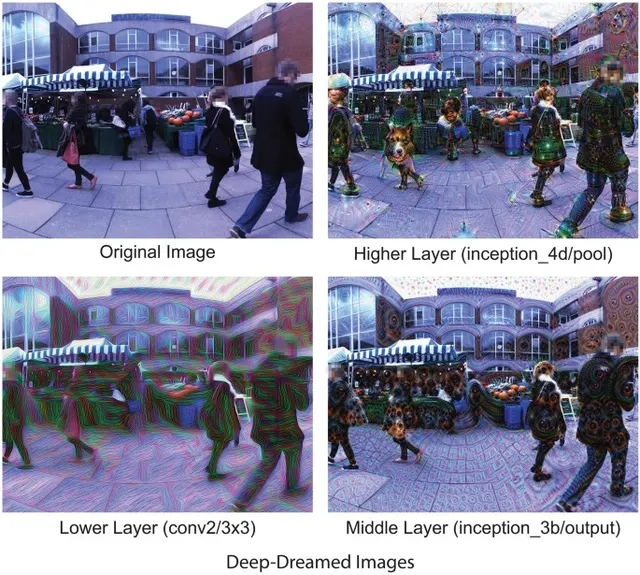
A Deep-Dream Virtual Reality Platform for Studying Altered Perceptual Phenomenology - Scientific Reports
A novel tool called the Hallucination Machine combines deep convolutional neural networks and panoramic VR to simulate visual hallucinatory experiences, mimicking the phenomenology of psychedelics without altering neurophysiology. Experiments show it induces similar visual effects but does not produce the temporal distortions typically associated with altered states.

A predictive coding approach to psychedelic virtual-induced hallucinations and creative cognition in aging
Recent research explores the potential of psychedelics in enhancing cognitive flexibility and creativity, particularly through Virtual Reality (VR) simulations. This approach may help counteract cognitive decline in aging, as it optimizes the balance between expectations and sensory information, thereby supporting creative cognition and maintaining cognitive functions.

Exploring Peak Experiences through Multi-Sensory Extended Reality
Research explores how Multi-Sensory Extended Reality (MSXR) can induce Peak Experiences and altered states of consciousness to improve mental health. The study uses a qualitative phenomenological approach to capture participants' experiences and perceived therapeutic benefits, aiming to enhance the role of immersive technologies in mental health interventions and contribute to counseling psychology and consciousness studies.
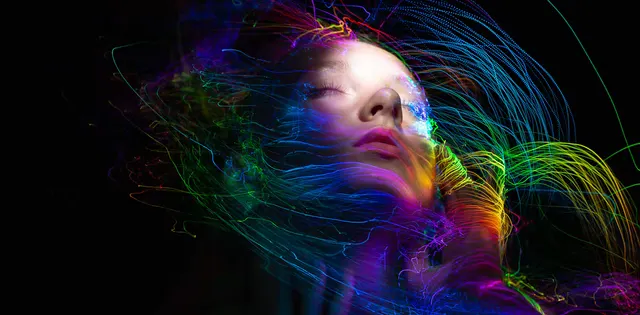
Flicker light stimulation enhances the emotional response to music: a comparison study to the effects of psychedelics
Flicker light stimulation (FLS) enhances emotional responses to music, similar to the effects of psychedelics. In a study with twenty participants, FLS significantly increased reported emotions, particularly "Joyful Activation," and intensity of FLS correlated with higher emotional arousal. These findings suggest further exploration of FLS as a method for inducing altered states of consciousness and its interaction with music-evoked emotions.
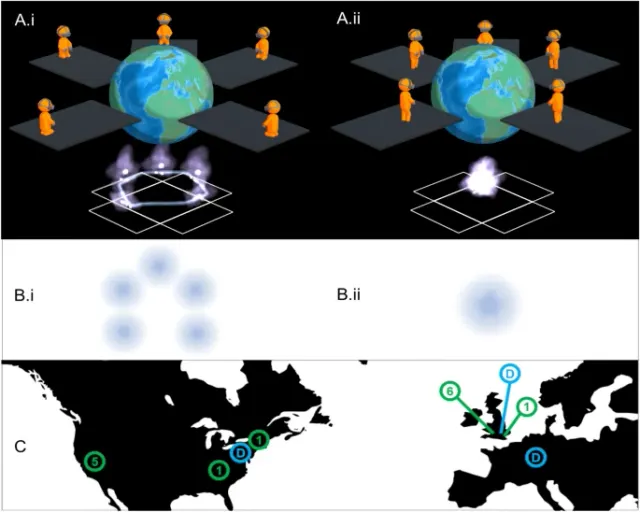
Group VR experiences can produce ego attenuation and connectedness comparable to psychedelics
Research explores the potential of virtual reality (VR) to create self-transcendent experiences (STEs) similar to those induced by psychedelics. Using a framework called 'Isness-distributed', participants in shared VR spaces experience a blurring of self-other boundaries, leading to moments of 'energetic coalescence'. Analysis of 58 participants showed that the subjective experiences in VR were statistically comparable to those reported in psychedelic studies, indicating VR's capability to facilitate intersubjective STEs that dissolve individual ego in connection with others.
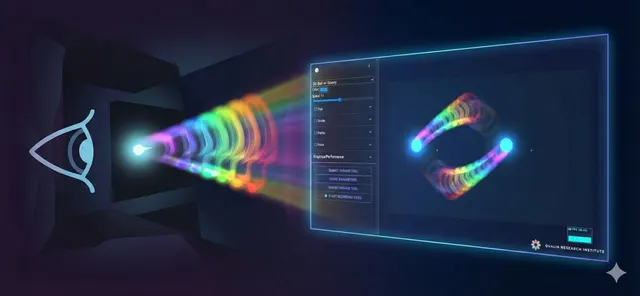
Modeling Psychedelic Tracers with QRI’s Psychophysics Toolkit: The Tracer Replication Tool
A new method called the Tracer Replication Tool has been developed to replicate psychedelic tracer effects, revealing how the time-like texture of experience influences states of consciousness. This tool aims to describe ineffable experiences, standardize a scale of psychedelic effects, quantify drug synergy, and test theories on the quality of experiences. Initial findings suggest distinct patterns in effects from various substances, such as THC and HPPD producing faint trails, and DMT resulting in vibrant visuals compared to the monochromatic effects of 5-MeO-DMT. The research encourages further exploration of these patterns within the scientific community and among psychonauts.

Research Cyberdelics: Context engineering psychedelics for altered traits
Cyberdelics and Cyberdelic Psychotherapy can enhance therapeutic psychedelic experiences through context engineering, which restructures perception and cognition. This approach aims to optimize psychedelic-assisted therapy by utilizing virtual and augmented environments, game mechanics, and principles from positive psychology and mindfulness, potentially aiding in personal growth and mental health recovery.

Sipping the virtual elixir: An autoethnographic close reading of Ayahuasca Kosmik Journey, a self-transcendent virtual experience
Self-transcendent experiences in ancient psychedelic ceremonies, like ayahuasca, can be explored through virtual reality (VR) as a legal alternative. An autoethnographic analysis of Ayahuasca Kosmik Journey reveals insights into the design and experience of cyberdelic interactions, highlighting themes of agency, embodiment, and self-transcendence. The study emphasizes the role of spatiality and sensory engagement in evoking profound emotional responses, while also addressing the limitations of immersive technology in replicating these experiences.
Technodelic Transformation: A Study on Virtual Reality for Psychological Well-Being
Research confirms the efficacy of Virtual Reality (VR) in treating mental health disorders, highlighting its potential as an embodied medicine for transformative experiences similar to psychedelics. The study investigates the effects of SoundSelf VR, focusing on its impact on psychological well-being, transformative processes, and the relationship between non-ordinary states of consciousness and mental health, using a participatory research methodology.